Influenza Treatment
Rethinking Influenza Treatment Beyond Conventional Antivirals
Addressing a Critical Treatment Gap
Seasonal influenza continues to be a major global health challenge, resulting in billions of infections and hundreds of thousands of deaths every year. Current standard-of-care treatments are only effective when administered early in disease (within 48 hrs of symptom onset) and have limited impact on symptoms, highlighting the need for treatment options for patients who seek care after symptoms have progressed.

Our Approach
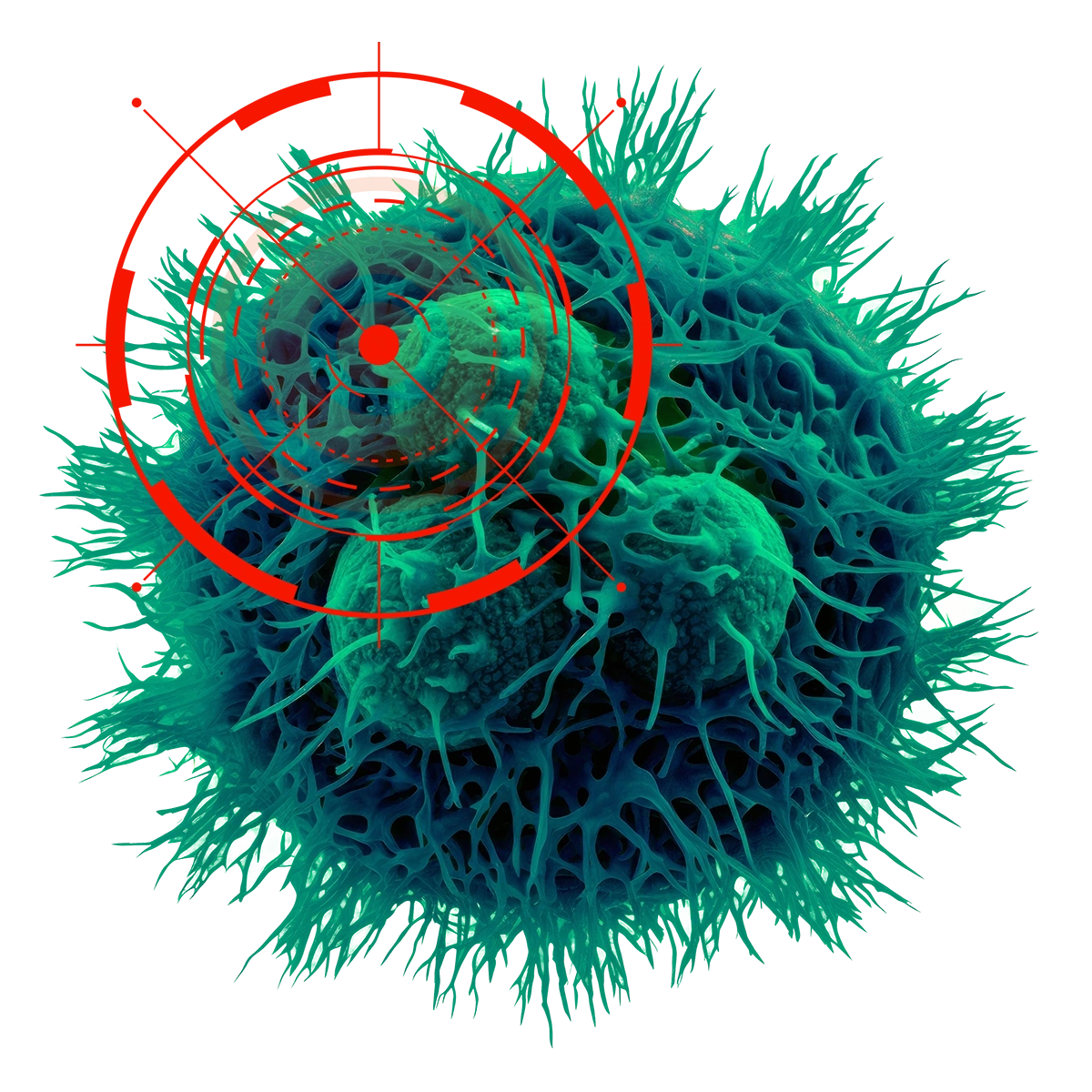
EV25 is a clinical-stage small molecule designed to address this gap by shifting the treatment strategy from direct viral inhibition to targeted immune-mediated clearance. Rather than relying on disruption of viral replication, EV25 is designed to bind to infected cells and virions and then recruit the body’s existing circulating antibodies to clear infection.
Our approach creates the potential for a new therapeutic option to treat both early- and late-stage influenza infections.
How EV25 Works
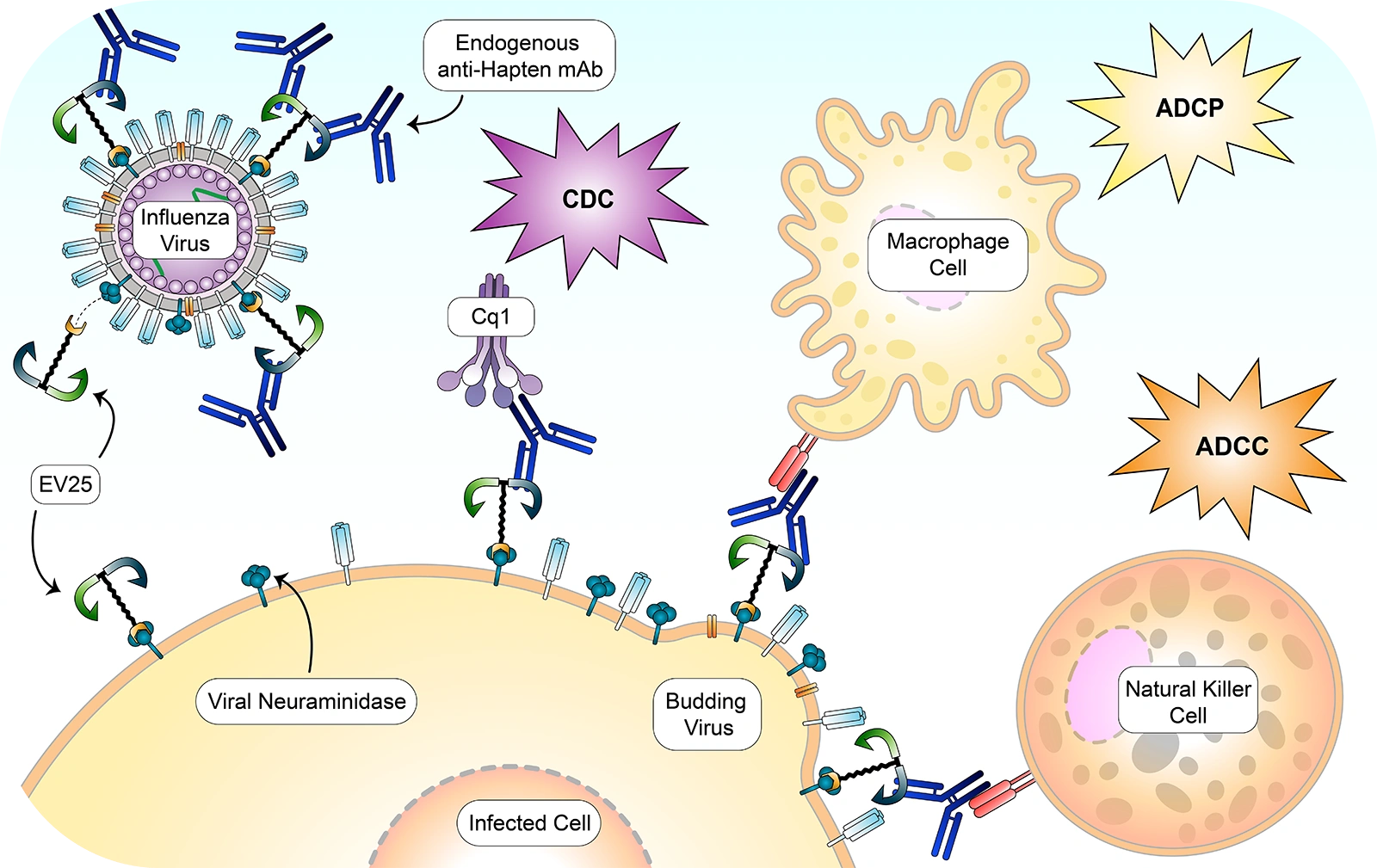
EV25 is designed to selectively bind influenza virus and infected cells to endogenous antibodies driving targeted immune clearance through natural killer (NK) cells, macrophages and the complement cascade.
Targets influenza virions and infected cells EV25 binds to influenza through a neuraminidase-targeting ligand.
Recruits existing antibodies EV25 uses immunologic haptens to engage circulating anti-hapten antibodies.
Promotes immune-mediated clearance Once anti-hapten antibodies are bound, natural immune responses rapidly recognize and eliminate them.
Our Progress
EV25 is currently being evaluated in Phase 2 studies.
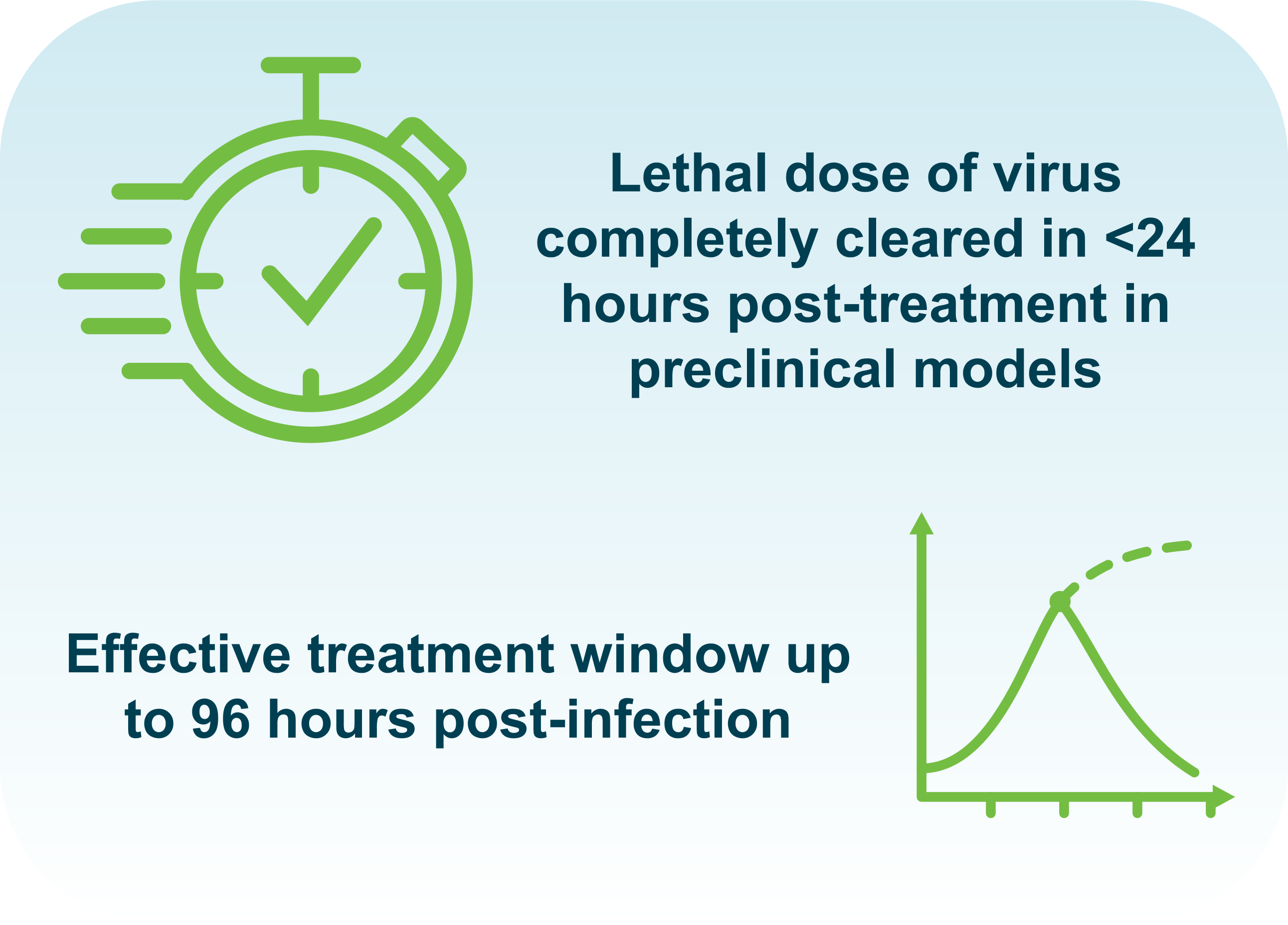
In clinical trials, EV25 has been generally well tolerated and showed significant reductions in viral load and symptoms in a controlled human influenza challenge study. Preclinical models have also demonstrated single-dose efficacy and an extended therapeutic window compared with current standard-of-care treatment.